 fa
 tr
 ar


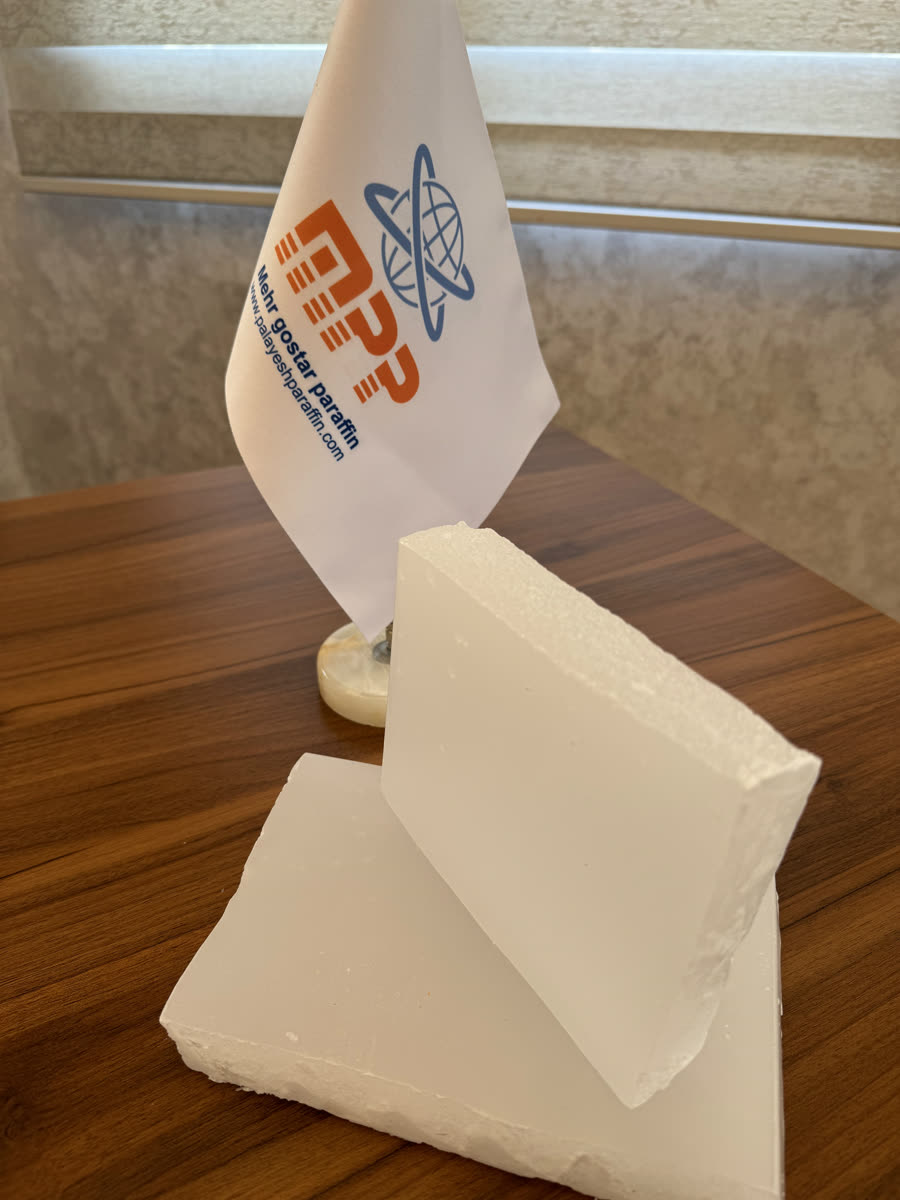
Microcrystalline wax and paraffin wax are both petroleum waxes, and both come from refining crude oil, but they behave very differently: paraffin is hard and brittle with large crystals, while microcrystalline wax is soft, flexible and tacky with very fine crystals. That difference decides which one suits candles, which suits rubber and adhesives, and which suits cosmetics. In this article we compare the two by origin, structure, technical properties and uses.
What is paraffin wax?
Paraffin wax is a mixture of saturated hydrocarbons, most of them straight-chain (normal alkanes). It is produced from the lighter lube cuts of vacuum distillation by dewaxing and de-oiling slack wax. Straight chains pack together easily and form large plate- or needle-shaped crystals, which is why paraffin is hard, glossy, slightly translucent and brittle.
What is microcrystalline wax?
Microcrystalline wax is obtained from heavier cuts, the vacuum distillation residue, and by de-oiling petrolatum. It contains a larger share of branched (isoparaffinic) and cyclic (naphthenic) hydrocarbons, and its chains are longer. Branched chains cannot line up neatly, so the crystals stay very small and the wax becomes soft, elastic and tacky.
Microcrystalline wax vs paraffin wax: comparison table
| Property | Paraffin wax | Microcrystalline wax |
|---|---|---|
| Origin in the refinery | Lighter lube cuts of vacuum distillation | Heavy vacuum residue and petrolatum |
| Molecular structure | Mostly straight chains | More branched and cyclic chains, longer chains |
| Crystals | Large, plate- or needle-shaped | Very fine |
| Physical state | Hard, brittle and glossy | Soft, flexible and tacky |
| Appearance | White and slightly translucent | Opaque; white to yellow or brown depending on refining |
| Melting point | Mehr Gostar grades 54–66 °C | Usually higher, about 60–90 °C |
| Oil retention | Releases excess oil (sweating) | Holds oil better |
| Melting point test | ASTM D87 (cooling curve) | ASTM D127 (drop melting point) |
For both, hardness is measured by needle penetration (ASTM D1321) and viscosity by ASTM D445. The oil content of paraffin is measured by ASTM D721; Mehr Gostar paraffin wax grades range from about 0.5% to 8% oil.
Why are their melting points measured by different methods?
As paraffin cools, it crystallises at a definite temperature and the temperature pauses on the cooling curve; method D87 reads that point. Microcrystalline wax has no such clear pause and softens gradually, so method D127 is used instead, which measures the temperature at which the first drop falls. When you compare two analysis sheets, always check which method the melting point was reported with.
Uses of paraffin wax
- Candles and matches: the hardness and gloss of paraffin give well-shaped, clean-burning candles; to choose a grade, read the best paraffin for candle making.
- Paper and packaging: moisture-resistant coating for paper and board.
- Emulsions, MDF and particleboard: as a water-repellent agent.
- Cosmetics: fully refined grades in creams and bulking products.
- Rubber: together with microcrystalline wax for surface protection.
Uses of microcrystalline wax
- Rubber and tyres: together with paraffin, it forms a layer on the rubber surface that protects it from cracking caused by ozone and sunlight.
- Hot-melt adhesives: it increases the flexibility and tack of the adhesive.
- Cosmetics: lipsticks, balms and creams; it gives body and gloss and holds oil.
- Cheese coating and packaging: a flexible layer that does not crack.
- Investment casting: making wax patterns for precision casting.
- Cables and insulation: moisture-resistant coating.
Blending paraffin and microcrystalline wax
In many applications the two are blended to get the benefits of both. In candle making, for example, adding a small amount of microcrystalline wax to paraffin reduces brittleness, helps prevent cracking and shrinking as the candle cools, and holds fragrance better. In the rubber industry a blend of the two protects better across temperatures, because each one migrates to the rubber surface in its own temperature range.
Which one should you choose?
- Need hardness, gloss and easy moulding? Paraffin wax; for candles, matches and paper coating.
- Need flexibility, tack or oil retention? Microcrystalline wax; for adhesives, lipsticks and flexible coatings.
- Need both? A blend of the two in the right ratio.
The exact grade depends on the melting point, oil content and hardness you need. For paraffin wax grade specifications and analysis sheets, contact the Mehr Gostar sales team. If you are not yet familiar with the differences between paraffin grades, read light vs heavy paraffin wax.
Frequently asked questions
What is the main difference between microcrystalline wax and paraffin?
Paraffin is mostly straight chains with large crystals and is hard and brittle; microcrystalline wax has a larger share of branched and cyclic chains and very fine crystals, and is soft, flexible and tacky.
Which has the higher melting point?
Microcrystalline wax usually has a higher melting point, about 60–90 °C. Mehr Gostar paraffin wax grades are 54–66 °C.
Which is better for candle making?
Candles are usually based on paraffin wax. Adding a small amount of microcrystalline wax reduces brittleness and helps prevent cracking.
Why is microcrystalline wax tacky?
Because its crystals are very fine and it holds more oil, which makes it suitable for adhesives and flexible coatings.
Submit a comment
No comments found


