 fa
 tr
 ar


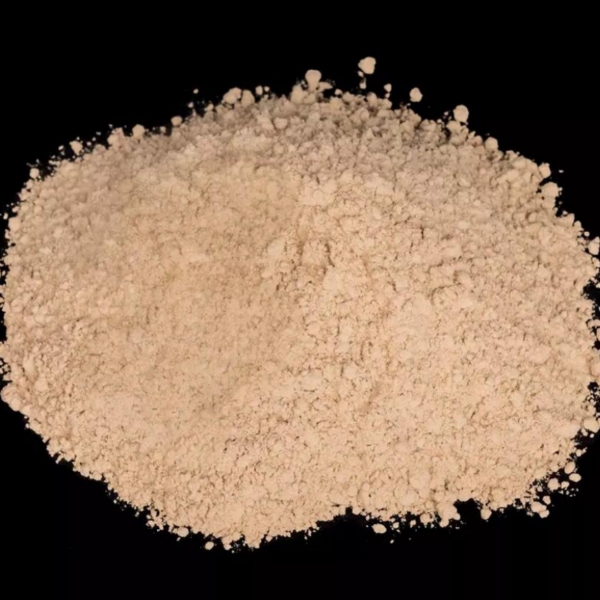
Bleaching is one of the main steps in edible oil refining. In this step, crude or neutralized oil is mixed with bleaching earth to remove pigments, residual soap, trace metals and oxidation products. The result is a lighter, more stable oil that is ready for deodorization. This article explains where bleaching sits in the refining line, the key process parameters, how to find the right bleaching earth dosage, and the most common problems.

Where does bleaching sit in the oil refining line?
Chemical refining of edible oil usually has four main steps:
- Degumming: removing phospholipids and gums with water or acid.
- Neutralization: removing free fatty acids with caustic soda and separating the resulting soap.
- Bleaching: adsorbing pigments and impurities with bleaching earth.
- Deodorization: removing volatile and odorous compounds with steam under vacuum at high temperature.
In physical refining, the neutralization step is skipped and free fatty acids are removed during deodorization. Bleaching matters even more here, because the bleaching earth must also reduce residual phosphorus and metals before deodorization.
What does bleaching earth remove from oil?
- Chlorophyll: the source of green color in soybean and rapeseed oil. Deodorization hardly removes it, so it has to be reduced during bleaching.
- Carotenoids: the source of yellow and orange color. Part is adsorbed during bleaching and part breaks down at deodorization temperatures.
- Residual soap and phospholipids: if left in the oil, they harm product quality and the deodorization step.
- Trace metals such as iron and copper: they speed up oxidation and shorten shelf life.
- Peroxides and oxidation products: acid-activated earth breaks down peroxides, and the resulting compounds are removed during deodorization.
Key bleaching process parameters
Bleaching quality depends on the process conditions as much as on the type of earth. The table below shows common ranges. The exact value of each parameter should be set by testing on your own oil.
| Parameter | Common range | Effect |
|---|---|---|
| Bleaching earth dosage | About 0.5 to 3% of oil weight | Too little leaves color behind; too much raises cost and oil loss. |
| Temperature | About 90 to 110 °C | Low temperature slows adsorption; very high temperature raises the risk of oxidation. |
| Contact time | About 20 to 30 minutes | The earth needs enough time to reach maximum adsorption. |
| Vacuum | Vacuum bleaching is preferred | Reduces contact with oxygen and removes excess moisture. |
| Moisture | Small and controlled | A little moisture helps the earth work, but too much makes filtration harder. |
Atmospheric bleaching vs vacuum bleaching
In atmospheric bleaching, oil and earth are mixed in an open tank at normal pressure. It is simpler, but the hot oil is in contact with air, so oxidation is more likely. In vacuum bleaching, the mixture is stirred in a closed vessel at low pressure. This is the standard for most modern industrial lines because it gives better color and protects oil stability. Bleaching can be run in batches or continuously; large plants usually use continuous bleaching.
How to find the right bleaching earth dosage
The best method is a laboratory bleaching test. Bleach identical oil samples with different earth dosages (for example 0.5, 1, 1.5 and 2%) under the same conditions, filter them, and measure the quality of each sample. Beyond a certain point, adding more earth usually has little effect on color. The optimum dosage is the point where color and quality reach the target and more earth is no longer worth the cost.
Indicators usually checked after bleaching:
- Lovibond color: in red and yellow units.
- Chlorophyll content: especially in soybean and rapeseed oil.
- Peroxide value (PV): a sign of oxidation.
- Residual soap and phosphorus: to make sure the oil is ready for deodorization.
- Free fatty acids (FFA): acid-activated earths can raise FFA slightly.

Bleaching tips for different oils
- Soybean and rapeseed oil: high in chlorophyll and need an acid-activated earth with high adsorption power.
- Palm oil: rich in carotene. Much of its color is destroyed at deodorization temperatures, so bleaching mainly removes impurities and prepares the oil.
- Sunflower oil: lower in pigments and usually bleached at a lower dosage, but it may also need winterization (dewaxing).
- Cottonseed oil: contains specific pigments such as gossypol, so neutralization and bleaching need close control.
In some cases, for example with dark oils or to reduce specific compounds, a small amount of activated carbon is used together with bleaching earth.
Filtration and spent earth
After the contact time, the earth is separated from the oil with leaf filters or a filter press. Particle size directly affects filtration speed: very fine particles adsorb well but slow down the filter. Spent earth holds a significant amount of oil, so choosing an earth with lower oil retention reduces oil loss.
Safety note: because of the oil it holds, spent earth can heat up by itself and catch fire. Store it in a cool place away from flammable materials and dispose of it according to safety and environmental rules.
Common bleaching problems and likely causes
| Problem | Likely causes |
|---|---|
| Oil color does not reach the target | Low dosage, low temperature, short contact time, high soap or phosphorus in the incoming oil |
| Green tint in the oil | High chlorophyll and not enough adsorption power in the earth |
| Slow filtration | Very fine particles, high moisture or high soap |
| Higher peroxide value or unstable oil | Contact with air at high temperature; vacuum bleaching reduces this |
| High oil loss | Excessive dosage or an earth with high oil retention |
Which bleaching earth should you choose?
When buying bleaching earth for edible oil refining, check its bleaching power on your own oil, filtration speed, oil retention in the spent earth, moisture and acidity. Ask for the certificate of analysis (COA) of each shipment and, if possible, test a sample in your laboratory before the main order. See full specifications and how to order on the bleaching earth page.
Besides edible oil, bleaching earth is also used to refine mineral oils, liquid paraffin and petroleum jelly. To learn how paraffin is refined, read the paraffin production process.
Frequently asked questions
What is edible oil bleaching?
Bleaching is a refining step in which hot oil is mixed with bleaching earth so that pigments, soap, metals and oxidation products are adsorbed, and the earth is then removed by filtration.
How much bleaching earth is used for edible oil?
Usually about 0.5 to 3% of the oil weight, depending on the type and quality of the oil. The optimum dosage is found with a bleaching test on an oil sample.
What is the right temperature for oil bleaching?
In most industrial lines about 90 to 110 °C, preferably under vacuum, with a contact time of about 20 to 30 minutes.
Why is vacuum bleaching better?
It reduces contact between hot oil and oxygen, prevents oxidation and removes excess moisture, giving oil with better color and stability.
Does bleaching earth also remove odor?
Bleaching earth adsorbs some unwanted compounds, but removing odor is the job of deodorization, which comes after bleaching.
Submit a comment
No comments found


