 fa
 tr
 ar


What is paraffin?
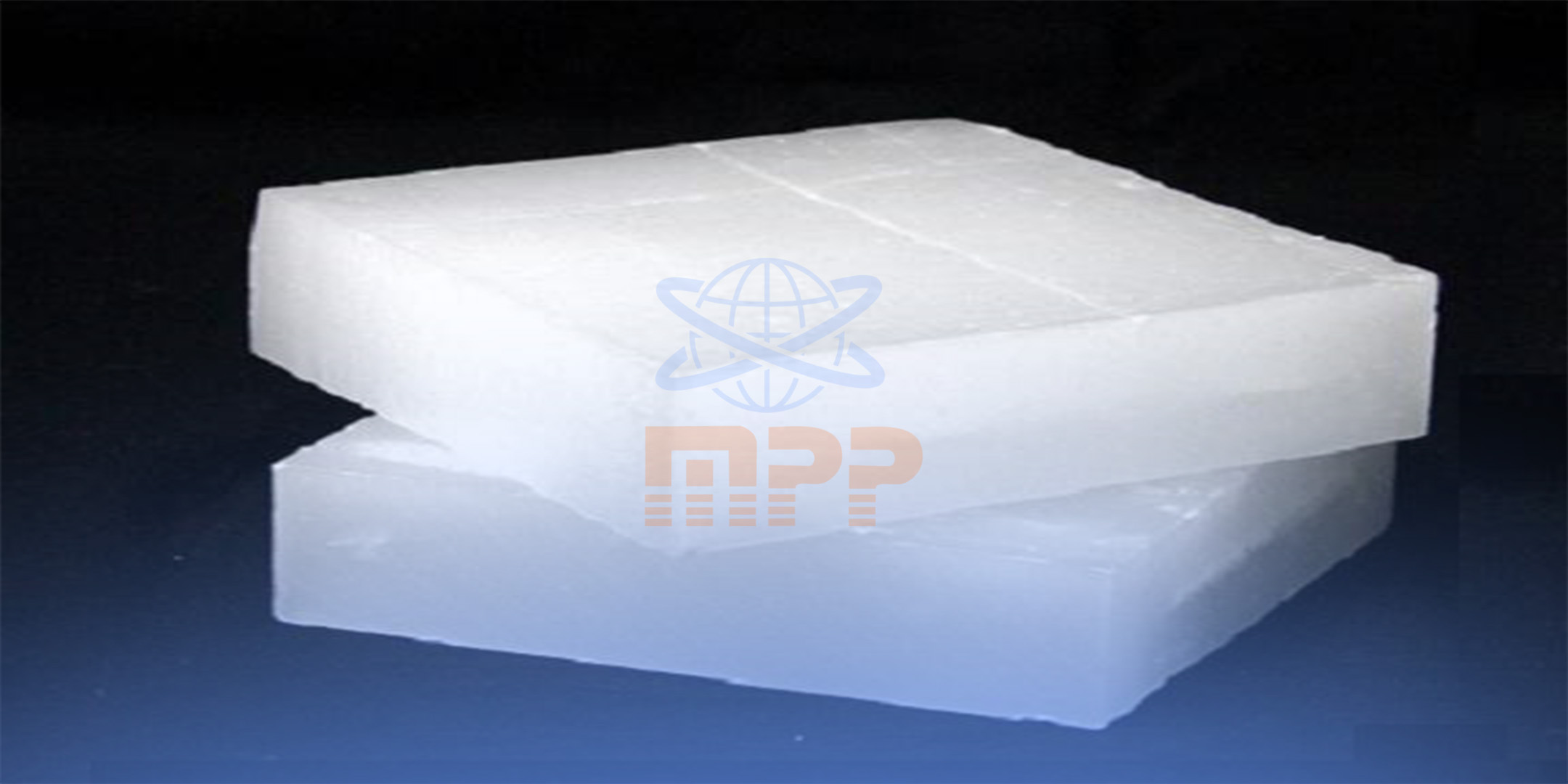
To answer the question what is paraffin: it is a colourless, odourless and tasteless hydrocarbon obtained from petroleum. Contrary to the common belief that it is only used to make candles, paraffin is useful in a wide range of industries.
Paraffin comes in two main forms, solid and liquid. Solid paraffin is used mainly in candle making, while liquid paraffin is widely used in textiles, rubber, adhesives, cosmetics, packaging and many other industries. Because its uses vary so much, paraffin does many different jobs, from preventing rubber from cracking to insulating against moisture and dust and acting as a lubricant.
Types of paraffin
Paraffin is a petroleum-derived hydrocarbon that exists as a liquid or a solid. It is also worth knowing the relationship between liquid paraffin and paraffin oil: liquid paraffin oil is a colourless to slightly yellow liquid, often called mineral oil, obtained from crude oil distillation. It is divided into light and heavy grades by viscosity.
Solid paraffin contains from less than 0.5% to a few percent oil depending on how refined it is, and looks like a white or milky solid wax. Common grades typically melt at around 58–60 °C and set at around 50–55 °C. Solid paraffin is supplied in cosmetic, food and industrial grades and is used in many applications, including candle making.
- Liquid paraffin: white and clear, liquid at room temperature and with a high boiling point. It is divided into light and heavy grades by viscosity.
- Crystalline paraffin: translucent and glass-like. Because of its low oil content it is strong and burns more slowly, which makes it a good choice for handmade candles.
- Gel paraffin: transparent and, unlike solid paraffin, takes a long time to melt. It is more sensitive to temperature, should be melted with indirect heat and is mostly used for clear candles in glass containers.
- Moulding paraffin (with stearic acid): a solid paraffin sold in slabs and used mostly for moulded candles.
- Flake candle paraffin: a paraffin with a higher oil content, used mostly for decorative candles.
- Pliable (sculpting) paraffin: a soft paraffin that can be shaped by hand and burns cleanly; it is used for decorative candles such as rose-shaped candles.
- Clear paraffin: a highly refined paraffin used for container and glass candles.
Types of candle-making paraffin
Paraffin is one of the main raw materials of the candle industry. This colourless and odourless hydrocarbon comes in several types and is used to make candles in many shapes and sizes. Thanks to its thermal stability, easy pouring and moulding, flexibility and ability to blend with colours and fragrances, it is a popular choice among candle makers. Each type of candle-making paraffin has its own properties and uses:
- Solid paraffin with stearic acid: paraffin with added stearic acid so that the candle is harder, more opaque and easier to release from the mould. These paraffins are grouped by oil content:
- 0.5 to 1% oil
- 1 to 3% oil
- 3 to 5% oil
- 5 to 7% oil
- Crystal paraffin: white and highly translucent and more expensive than ordinary solid paraffin. With greater flexibility, clarity and a higher melting point, it is used for paraffin candles, and colours blend into it better.
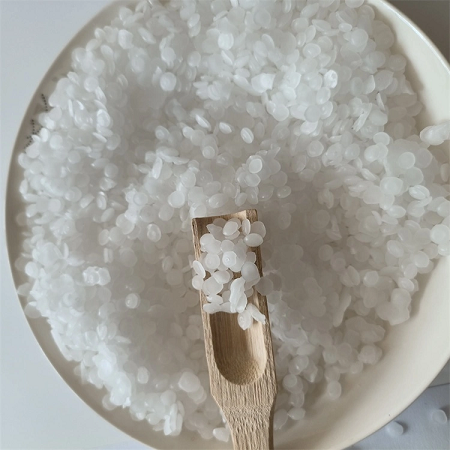
- Gel paraffin: Paraffin jelly is far more transparent than solid paraffin and is used mostly for decorative container candles. It burns longer than solid paraffin and needs indirect heat to melt.
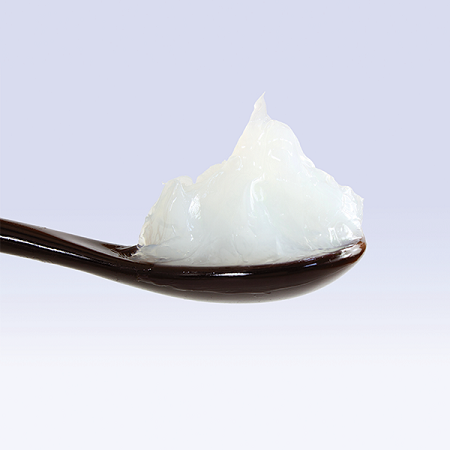
- Liquid paraffin: low in viscosity and used to make liquid candles. Its clarity and colourlessness depend directly on its quality and grade.
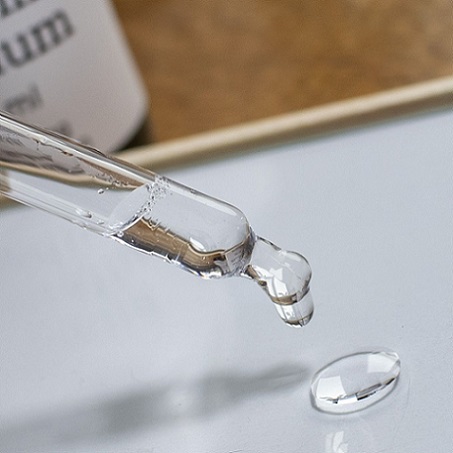
- Beeswax for candles: beeswax has been used for candles since ancient times and is still used as coloured sheets, wax granules and more. It is natural with a mild honey scent, but it costs far more than paraffin.
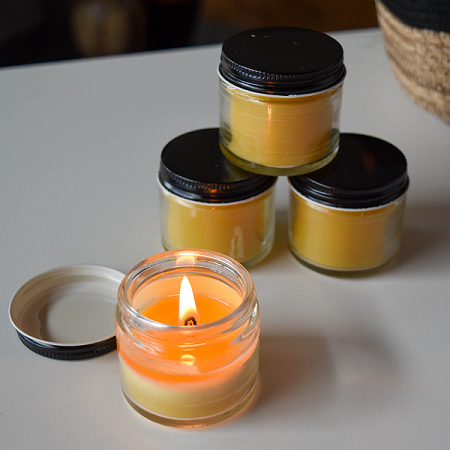
Mehr Gostar supplies a wide range of candle-making paraffins, from liquid to solid and from food grade to industrial grade.
Uses of paraffin
The different types of paraffin have many uses across industries, for example:
- Candle making: solid and liquid paraffin are widely used to produce candles, including decorative, scented and pillar candles.
- Paper and printing: paraffin is used as a lubricating and water-repellent agent in paper production and printing.
- Textiles: paraffin is used as a lubricating and water-repellent agent in dyeing and finishing fibres and fabrics.
- Plastics and rubber: paraffin acts as a softener and helps prevent products from drying out and cracking.
- Food industry: food-grade paraffin is used to coat cheese, fruit and vegetables and in chewing gum, chocolate and food packaging paper.
- Pharmaceuticals and personal care: in some pharmaceutical and personal care products, such as skin creams and lotions, paraffin is used as a conditioning and water-repellent ingredient.
- Packaging: paraffin provides insulation and protection against moisture and air.
- Cosmetics: in moisturising creams and body lotions, paraffin acts as an emollient and helps retain moisture.
Composition and chemical formula of paraffin
Paraffin is the name used for alkanes with the chemical formula CnH2n+2. Depending on the number of carbon atoms and the chain structure, alkanes exist as gases, liquids or solids. In the petroleum industry there are two main types of paraffin: liquid paraffin, obtained from light base-oil cuts, and solid paraffin, produced from the wax cut known as slack wax.
What is food-grade (oral) liquid paraffin?
Oral liquid paraffin, sometimes called paraffin syrup, is a highly refined mineral oil. It is fairly thick and slightly viscous, and its extra refining greatly reduces substances harmful to health. It is used as a laxative to relieve some digestive problems such as constipation.
Because it does not dissolve in water, oral liquid paraffin softens and lubricates the stool and makes bowel movements easier. It must only be used on a doctor’s advice: unsupervised or excessive use can harm the digestive system and interfere with the absorption of some medicines, and long-term heavy use can reduce the absorption of fat-soluble vitamins.
Physical and chemical properties of paraffin
| Property | Solid paraffin | Liquid paraffin |
|---|---|---|
| Chemical composition | Alkanes with about 20 to 40 carbon atoms | Mixture of saturated hydrocarbons (paraffinic and naphthenic) |
| State at room temperature | Waxy solid, white to milky | Oily liquid, clear and colourless |
| Melting / boiling point | Melts at about 46 to 68 °C depending on grade | High boiling point (usually above about 260 °C) |
| Solubility | Insoluble in water; soluble in non-polar solvents such as hexane | |
| Reactivity | Stable; does not react with most acids and bases (the name paraffin comes from Latin for “little affinity”) | |
| Quality control standards | Melting point ASTM D87, oil content ASTM D721, colour ASTM D156 | Viscosity ASTM D445, Saybolt colour ASTM D156, pharmacopoeias (USP / BP / Ph. Eur.) |
How is paraffin made?
Solid paraffin comes from waxes separated in base-oil refineries when the oil is dewaxed. This crude wax, called slack wax, is de-oiled and then refined with hydrogen or bleaching earth to give white, odourless paraffin. Liquid paraffin is produced from refined oil cuts that are deeply treated to remove aromatic compounds. Read the details in our article on the paraffin production process.
Paraffin basics: quick answers
- Which group of substances does paraffin belong to? Hydrocarbons, more precisely saturated hydrocarbons or alkanes.
- Which elements is paraffin made of? Only carbon (C) and hydrogen (H), with the general formula CnH2n+2.
- Where does paraffin come from? From refining crude oil.
- Why does paraffin not dissolve in water? Because its molecules are non-polar while water molecules are polar.
- One use of paraffin: making candles, waterproof paper and fruit coatings.
Safety tips for using paraffin
- Molten paraffin is hot and can cause burns; always melt it with indirect heat.
- Paraffin is flammable; keep it away from open flames.
- Keep liquid paraffin out of reach of children; accidental inhalation into the lungs while swallowing is dangerous. Oral use only on a doctor’s prescription.
- For food, pharmaceutical and cosmetic uses, use only grades with the relevant certification.
Conclusion
Paraffin is a colourless, odourless and tasteless hydrocarbon obtained from petroleum. It comes in liquid and solid forms and is widely used in candle making, textiles, rubber, cosmetics, packaging, insulation and adhesives. Solid paraffin melts at a set temperature and has many industrial uses, including candle making, while liquid paraffin is a refined mineral oil that, in its oral form, is used under medical supervision to relieve constipation.
Frequently asked questions
What is paraffin?
Paraffin is the general name for alkanes with the formula CnH2n+2: saturated, colourless and odourless hydrocarbons obtained from petroleum and supplied mainly in solid and liquid forms.
What are the types of paraffin?
Solid paraffin (semi-refined and fully refined), crystalline paraffin, liquid paraffin (light and heavy), paraffin jelly and slack wax are the main types on the market.
What is paraffin made from?
Solid paraffin is produced from waxes separated in base-oil refineries (slack wax), and liquid paraffin from refined oil cuts of crude oil.
What is paraffin used for?
Candle making, matches, paper and packaging, rubber, textiles, particleboard, food, cosmetics and pharmaceuticals are among its most important uses.
Is paraffin dangerous for the body?
Refined paraffin of the right grade is safe for cosmetic and food uses, but liquid paraffin should only be taken by mouth on a doctor’s prescription and kept away from children.
Related articles and products
Submit a comment
No comments found


