 fa
 tr
 ar


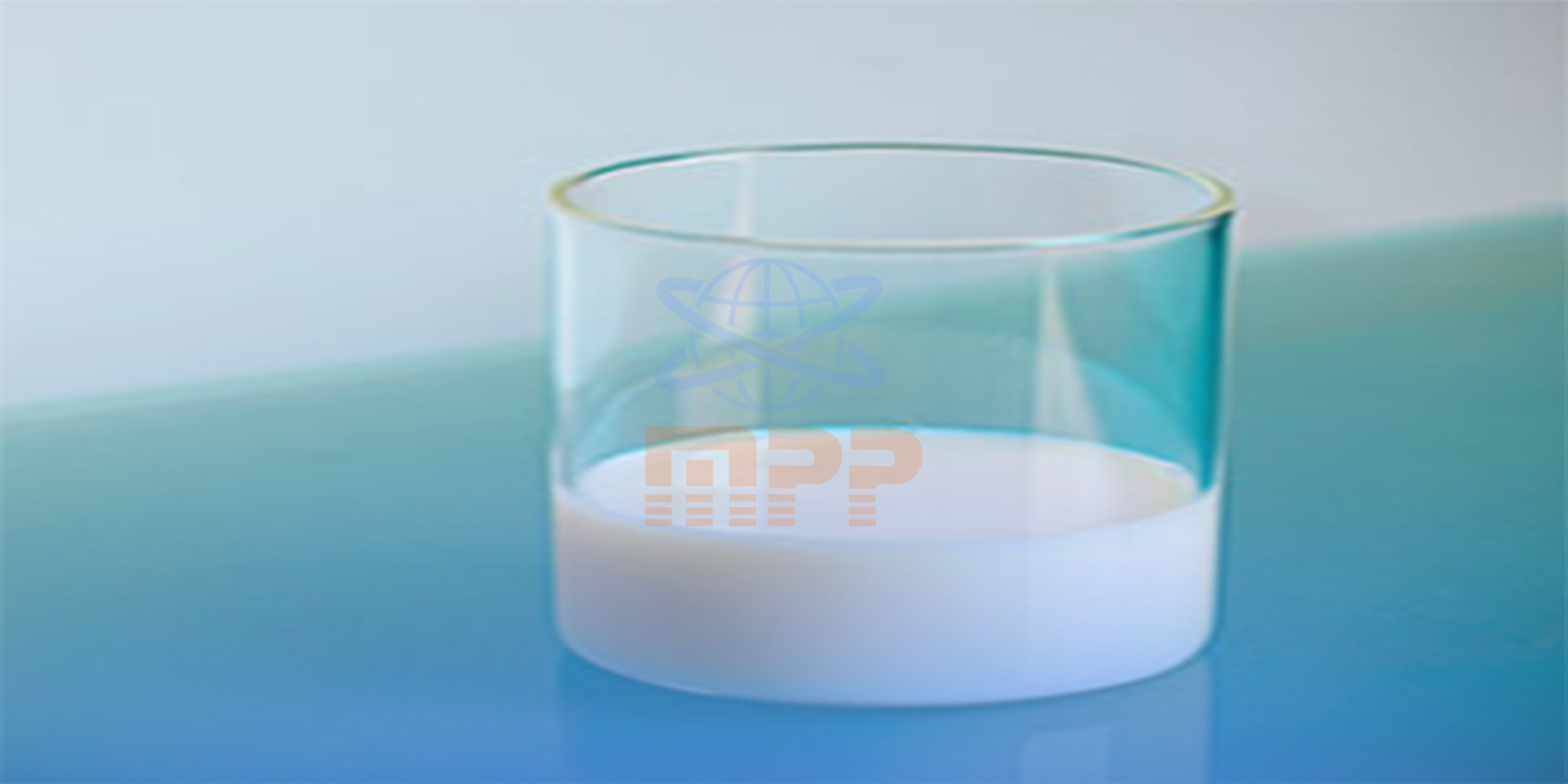
Paraffin emulsion is a colloidal mixture made by combining paraffin or wax with water. Because of its special properties, including its ability to penetrate materials, its water repellency and its ease of use, it is widely used in the wood industry, especially in the production of particleboard and MDF. The fine paraffin particles in the emulsion improve the quality and durability of wood products, while emulsifiers improve its stability and performance.
About paraffin emulsion
An emulsion is a colloidal mixture formed by combining an oil or wax with water. It consists of two immiscible substances, one suspended in the other. Emulsions are usually divided into water-in-oil and oil-in-water types.
Industrial paraffin emulsions are usually oil-in-water, because the finely broken-down paraffin wax particles are suspended in water. Made with suitable emulsifiers, they are produced as solid paraffin emulsions. They are widely used in particleboard and MDF production and are applied together with the adhesive (resin) to waterproof particleboard and other wood products.
Emulsifiers, which keep the particles stable and suspended by lowering the surface tension between water and paraffin, are a class of surfactants (surface-active agents). They are also widely used in food products, where they help stabilise emulsions.
Paraffin emulsion is also sold as slack wax emulsion. It also has an anti-dust effect that reduces dust build-up when cutting wood, and its use in the wood industry gives a smoother, more polished surface.
Advantages of paraffin emulsion
Using paraffin emulsion and slack wax emulsion in the wood industry brings many advantages that improve the quality and efficiency of wood products:
- Fine particle size: the particles of paraffin and slack wax emulsions are 1–5 microns, which helps the wax penetrate the wood better and improves its resistance to water and moisture.
- Easy storage: paraffin and slack wax emulsions are easier to store and handle than solid paraffin wax.
- Ease of use: they are easier and more efficient to use in production than solid paraffin wax.
- Lower fire risk: these emulsions carry a lower fire risk than solid paraffin wax.
- Optimised resin use: even distribution of the emulsion can help optimise resin consumption; the amount should be tested on the production line.
- Miscibility: they mix easily with melamine- and urea-based resins.
These features make paraffin and slack wax emulsions an excellent choice for improving efficiency and safety in the wood industry.
Direct production and supply of solid paraffin emulsion
Paraffin emulsion is widely used in many industries, including:
- Wood and MDF
- Papermaking
- Textiles
- Fibres (wool, silk, cotton, linen, hemp)
- Leather
- Glass fibres and protection of glass bottles
- Polishes
- Citrus fruit coatings (such as lemons and limes)
- Printing inks and varnishes
- Metal industries
- Protecting wood products, preventing dust build-up and creating a smooth, polished surface
From Mehr Gostar you can obtain solid paraffin emulsion in grades such as 5%, 10%, 15%, 20% and 25%. The company can also produce solid and liquid paraffin emulsions to customers’ specifications.
Typical technical specifications of paraffin emulsion
| Property | Typical range | Note |
|---|---|---|
| Solid content | Usually about 40–60% | The higher it is, the lower the dosage and the less water transported |
| Particle size | About 1–5 microns | Finer particles spread and penetrate better |
| pH | Depends on the emulsifier (anionic types are usually alkaline) | Must be compatible with the resin and process |
| Appearance | Milky white liquid | Phase separation or sediment indicates instability |
Types of paraffin emulsion by emulsifier
- Anionic: the most common type for MDF and particleboard; compatible with urea-formaldehyde and melamine resins.
- Cationic: for some paper, textile and fibre applications that need a positive surface charge.
- Non-ionic: good stability against salts and pH changes; suitable for coatings and special formulations.
Dosage and use in MDF and particleboard
In the wood panel industry, paraffin emulsion is usually sprayed onto the fibres or chips together with the resin or separately. The typical dosage is about 0.5–1.5% paraffin (as solids) relative to the dry weight of the wood. The exact amount depends on board density, resin type and the thickness swelling and water absorption requirements of the final product, and should be adjusted by trials on the production line.
Storage and shelf life
- Store paraffin emulsion at about 5–35 °C; freezing ruins the emulsion permanently.
- Keep containers closed and away from direct sunlight.
- Stir gently before use and avoid vigorous mixing, which causes foaming and can break the emulsion.
- Shelf life is usually a few months; ask the supplier for the production date and shelf life.
Conclusion
To buy paraffin emulsion and get more information about its uses and properties, contact Mehr Gostar. With wide expertise and experience in producing and supplying industrial emulsions, the company is ready to advise you and meet your specific needs. For more details, please get in touch through the official Mehr Gostar website or the phone numbers provided.
Frequently asked questions
What is paraffin emulsion?
Paraffin emulsion is a stable mixture of very fine paraffin or slack wax particles in water, made with an emulsifier and used mainly to waterproof MDF and particleboard.
Which industries use paraffin emulsion?
MDF and particleboard, paper and board, textiles and leather, polishes and coatings, fruit coatings, and printing inks and varnishes.
What is the dosage of paraffin emulsion in MDF?
Usually about 0.5–1.5% paraffin (as solids) relative to the dry weight of the wood, adjusted on the production line.
How should paraffin emulsion be stored?
At about 5–35 °C, protected from frost and direct sunlight, in closed containers; freezing ruins the emulsion.
What is the difference between paraffin emulsion and slack wax emulsion?
Paraffin emulsion is made from refined paraffin, while slack wax emulsion is made from crude wax with more oil; the latter is more economical and sufficient for many MDF applications.
Related articles and products
- What is an emulsion?
- Slack wax
- What is an emulsifier?
- Solid paraffin
Submit a comment
No comments found


