 fa
 tr
 ar


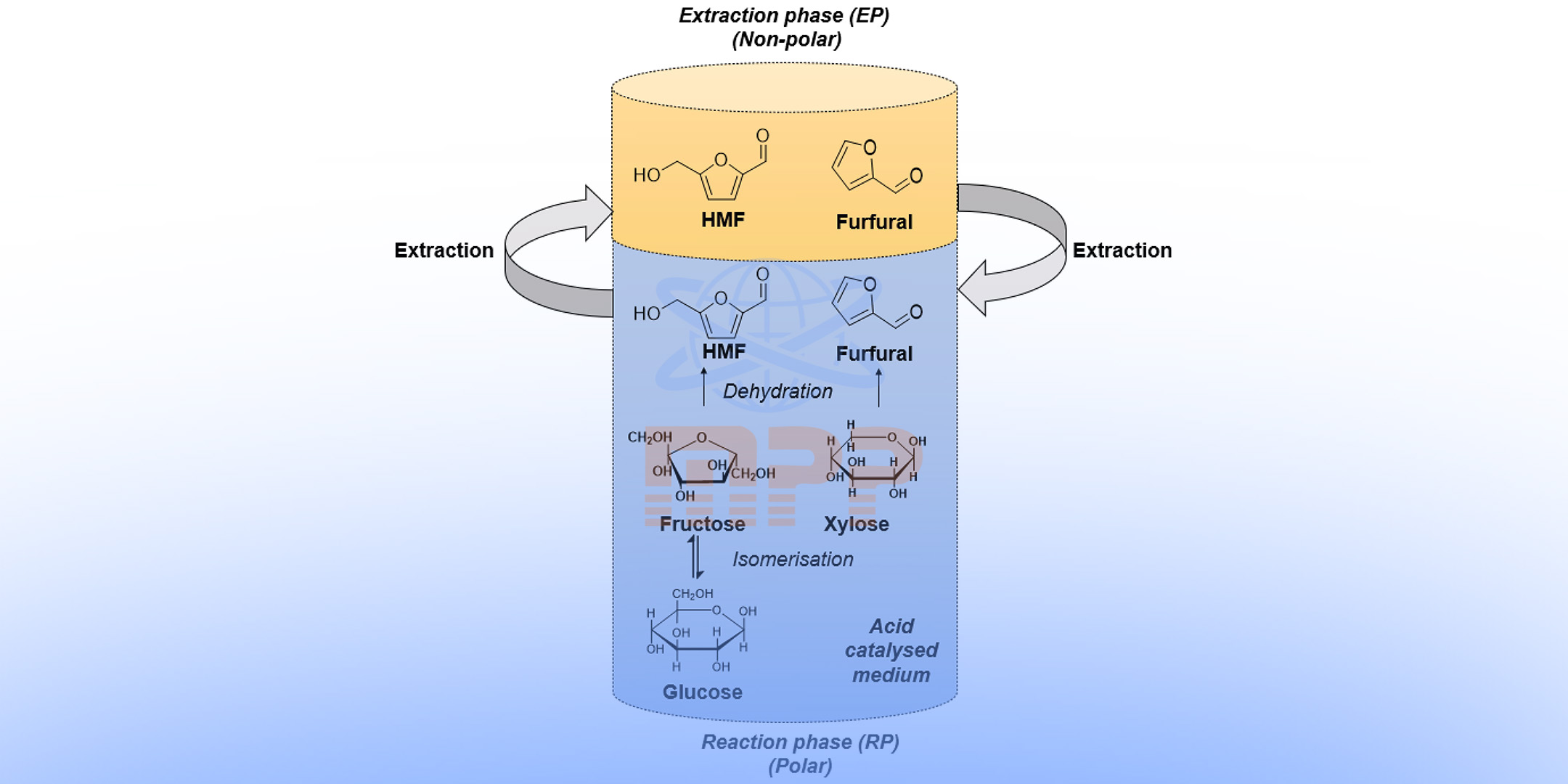
Furfural is an organic aldehyde with the formula C5H4O2. It is produced from agricultural residues, and in the oil industry it is used as a selective solvent for refining lubricating oils. When people in the market talk about “types of furfural”, they usually mean two things: furfural itself as a chemical solvent, and furfural extract, the by-product of refining oil with furfural. In this article we describe both precisely and explain their types, properties, uses and safety points.
What is furfural and how is it produced?
Furfural is obtained by acid hydrolysis of five-carbon sugars (pentosans) in biomass such as corncobs, sugarcane bagasse, rice husks and oat hulls. Pure furfural is a colourless to amber liquid with an almond-like odour that gradually darkens on exposure to air and light. Its boiling point is about 162 °C and its density about 1.16 g/cm³.
Types of furfural
1. Pure furfural (industrial solvent)
The main use of pure furfural is in lube oil refineries. Furfural dissolves aromatic compounds well but does not dissolve paraffinic compounds, so it is used to separate aromatics from oil cuts and produce high-quality base oil. Other uses of pure furfural include making furfuryl alcohol and furan resins (for foundry moulds), extracting butadiene, and producing some solvents and agrochemicals.
2. Furfural extract (DAE)
In a furfural extraction unit, the oil cut is split into two streams: the “raffinate”, which becomes base oil, and the “extract”, which is rich in aromatic compounds. After the solvent is recovered, a dark brown, thick and sticky material remains, called furfural extract or, internationally, Distillate Aromatic Extract (DAE). Note that furfural extract consists mainly of aromatic hydrocarbons; furfural is present in it only as a negligible residue.
Furfural extract is divided into two main groups according to the oil cut used as feed:
- Light extract: obtained from light oil cuts, with lower viscosity.
- Heavy extract: obtained from heavier cuts, with higher viscosity and flash point.
3. Furan-family compounds
Furfural belongs to the furan family of compounds. An important member of this family is hydroxymethylfurfural (HMF), which is obtained from six-carbon sugars and is important in the food industry and green chemistry.
Uses of furfural extract
- Rubber process oil: because of its high compatibility with SBR and natural rubber, it is used as a plasticiser and extender oil in hoses, belts, flooring and rubber parts.
- Carbon black feedstock: its high aromatic content makes it a suitable feedstock for producing carbon black.
- Bitumen and asphalt: used as an additive to modify and rejuvenate bitumen properties.
- Inks and coatings: used as a solvent or plasticiser in some printing inks and industrial coatings.
- Fuel component: used in blending some heavy industrial and furnace fuels.
Comparison of rubber process oils (RPO)
RPO (Rubber Process Oil) refers to oils used in rubber formulations. Furfural extract belongs to the aromatic oil group:
| Oil type | Aromatic content | Colour | Common use |
|---|---|---|---|
| Aromatic (DAE / furfural extract) | High | Dark | SBR and natural rubber, industrial parts |
| Treated aromatic (TDAE) and MES | Medium, with low PAH | Dark to medium | Tyres for markets with PAH limits |
| Naphthenic | Low to medium | Light | Coloured rubber, a wide range of elastomers |
| Paraffinic | Very low | Light | EPDM and butyl rubber |
Safety and regulatory limits
Pure furfural is toxic and flammable and must be handled with gloves, goggles and good ventilation. Furfural extract also requires safety precautions because it contains polycyclic aromatic hydrocarbons (PAHs). In the European Union, under REACH (Annex XVII, entry 50), extender oils used in tyres must not contain more than 1 mg/kg of benzo[a]pyrene or more than 10 mg/kg of the sum of eight listed PAHs. For this reason TDAE or MES oils are used for tyres exported to Europe. Always obtain the product’s safety data sheet (MSDS) from the supplier.
Tips for buying furfural extract
- Specify the viscosity, flash point and aromatic content according to your formulation.
- Ask for the certificate of analysis (COA) and the safety data sheet (MSDS).
- If your end product is for export, check the PAH requirements of the destination market.
- Agree on the packaging (drums or bulk) and the conditions for transporting flammable materials.
Mehr Gostar supplies furfural extract in bulk. See the specifications on the furfural extract page or contact our experts for a price quote.
Frequently asked questions
What is furfural?
Furfural is an organic aldehyde with the formula C5H4O2, produced by hydrolysis of agricultural residues such as corncobs and bagasse, and used in refineries as a solvent to separate aromatics from oil.
What is the difference between furfural and furfural extract?
Furfural is a pure chemical solvent, while furfural extract is the by-product of refining oil with this solvent and consists mainly of aromatic hydrocarbons.
In which industries is furfural extract used?
As a process oil in the rubber industry, in carbon black production, bitumen modification, inks and coatings, and in blending heavy fuels.
Is furfural extract allowed in tyres exported to Europe?
Standard aromatic oils do not meet the REACH limit because of their high PAH content; low-PAH oils such as TDAE or MES are used for tyres exported to Europe.
Related articles and products
Submit a comment
No comments found


