 fa
 tr
 ar


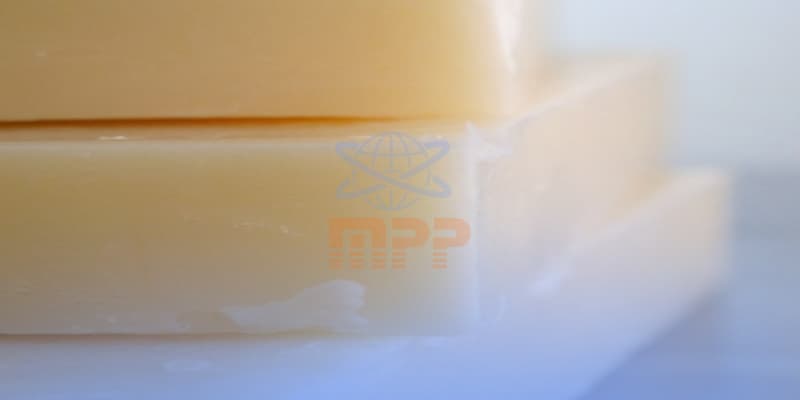
Slack wax is a petroleum wax obtained as a by-product in lube oil refineries during base oil production. It is in fact the raw material for solid paraffin: paraffin that has not yet been de-oiled and refined, which is why it has a higher oil content, a yellow to brown colour and a lower price. In this article you will learn about its production process, grades, technical specifications, uses, packaging and buying tips.
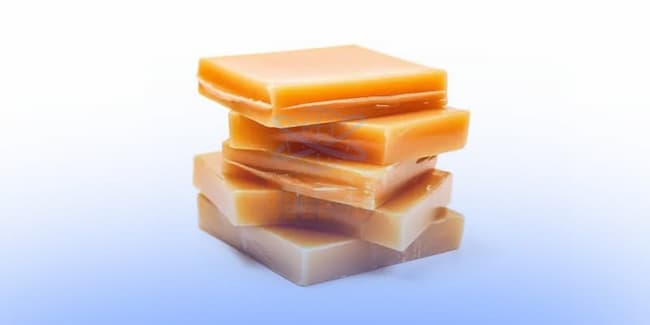
Packaging and customs classification of slack wax
Slack wax is usually supplied in bulk (flexitank or ISO tank) or in new or used 180 kg drums. A 20-foot container holds about 80 drums of 180 kg (about 14.4 tonnes), and each flexitank or ISO tank holds about 19–20 tonnes. Its HS code falls under 27129020, a group that covers petroleum jelly, paraffin wax, petroleum wax, slack wax, ozokerite, lignite wax, peat wax, other mineral waxes and similar products obtained by synthesis or other processes, whether or not coloured.
Slack wax processing
Slack wax is a by-product of converting lube cut into base oil. First, aromatic compounds are removed from the lube cut with a solvent, giving a product called raffinate. Then, in solvent dewaxing, the raffinate is diluted with solvents such as methyl ethyl ketone (MEK) and toluene and chilled, and the wax crystals are separated from the oil on rotary filters; the oil goes on to the base oil unit and the separated wax is slack wax. To turn slack wax into solid paraffin, its oil must be removed. This is done in two ways: solvent de-oiling, the common method today, and the older “sweating” method, which works by gradual melting and separation of the low-melting components.
In sweating, molten slack wax is cooled and solidified in pans or special chambers fitted with cold- and hot-water coils; the temperature is then raised slowly so that the oily, low-melting components “sweat out” and drain from the bottom. As this continues, the wax that remains has less oil and a higher melting point and becomes solid paraffin, while the drained fraction is called foots oil.
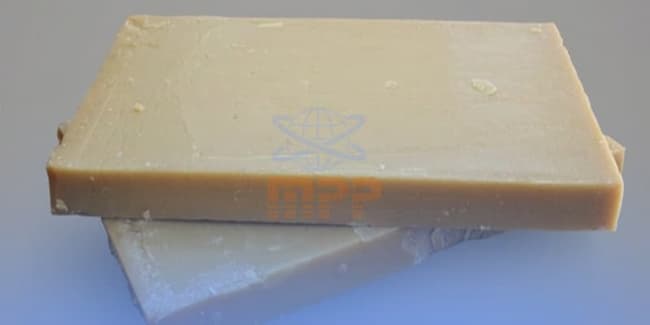
Technical specifications of slack wax
Slack wax specifications depend on the crude oil, the oil cut and the producing refinery. The table below shows typical ranges for the two main grades; the exact values for each shipment are given in its certificate of analysis (COA).
| Property | Light slack wax | Heavy slack wax | Test method |
|---|---|---|---|
| Melting point | About 50–58 °C | Up to about 68 °C | ASTM D87 / D938 |
| Oil content | Usually 5–20% | Up to about 35% | ASTM D721 |
| Colour | Light yellow | Brown to dark | ASTM D1500 |
| Odour | Mild petroleum | Petroleum | Sensory test |
Slack wax vs. paraffin vs. foots oil
These three products come from the same production chain; the main difference between them is their oil content and degree of refining:
- Slack wax: the crude wax from dewaxing base oil, with a medium to high oil content.
- Solid paraffin: slack wax that has been de-oiled and refined; whiter, harder and with a very low oil content.
- Foots oil: the waxy oil separated from slack wax during de-oiling; soft or semi-solid, with a very high oil content.
To learn about the whole chain, read our article on the paraffin production process.
Tips for buying slack wax
- Ask for the analysis sheet: compare melting point, oil content and colour with the needs of your production line.
- Choose the grade by application: the light grade is usually used for candles and matches, while the heavy grade is more economical for wax emulsions, MDF and anti-rust products.
- Specify the packaging: new or used drums, flexitank or ISO tank all affect the landed cost.
- Get a sample: test a sample on your production line before ordering in bulk.
- Storage: store slack wax in a dry place away from direct heat and flames.
For today’s price and an analysis sheet, contact Mehr Gostar’s sales experts.
Slack wax grades
Slack wax is a petroleum product obtained through chilling and separation in lube oil refining. It is divided into light and heavy grades, each with its own properties and uses.
1. Light slack wax
Composition: a mixture of paraffin wax and oil with a lower oil content than the heavy grade (usually about 5–20%, depending on the refinery).
Colour and odour: yellow or light brown with a mild odour.
Melting point: about 57 °C; it melts easily.
Light slack wax is a raw material for many products, including:
- Matches
- Large candles
- Paraffin wax production
It is packed in new or used 180 kg drums or shipped in bulk in ISO tanks and flexitanks. A 20-foot container takes about 80 drums of 180 kg (about 14.4 tonnes), while an ISO tank or flexitank holds about 20 tonnes.
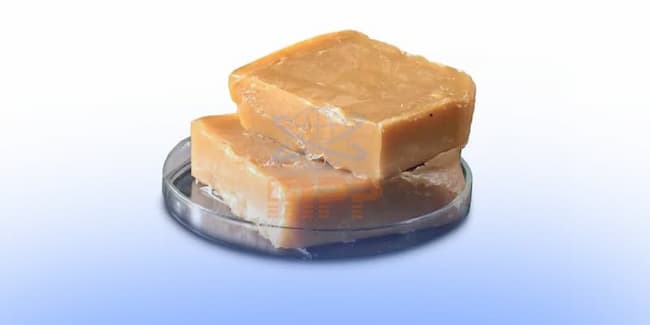
2. Heavy slack wax
Composition: heavy slack wax is a raw material for paraffin wax and is darker than the light grade; it is obtained mainly from heavier lube oil cuts.
Melting point: up to 68 °C.
Oil content: up to 35%.
Heavy slack wax is used in many industries:
- Wax emulsions
- Water-repellent agent for wood panels (MDF, particleboard and OSB)
- Anti-rust products
- Industrial lubricants
- Water-repellent coatings for cartons, bags and tarpaulins
It is packed in plastic bags or metal drums, and can also be packed to customer requirements, for example in jumbo bags or cartons. Whether light or heavy, slack wax is a very important material across industries, from everyday products such as matches and candles to industrial uses such as lubricants and anti-rust products. Proper, efficient packaging is also essential for safe and economical transport and storage.
Frequently asked questions
What grades of slack wax are there?
There are two main grades: light and heavy. The light grade has a lower oil content and a melting point of about 57 °C, while the heavy grade comes mainly from heavier lube cuts and has a melting point of up to 68 °C.
What are the main uses of slack wax?
Candles, matches, wax emulsions, adhesives and anti-rust products, industrial lubricants and water-repellent coatings for cartons, bags and tarpaulins.
How is slack wax produced?
Slack wax is produced in lube oil refineries by solvent dewaxing and chilling of raffinate (treated lube cut). Further de-oiling of slack wax gives solid paraffin.
How is slack wax packed?
It is usually supplied in new or used 180 kg drums or in bulk in flexitanks and ISO tanks. A 20-foot container can carry 80 drums of 180 kg or one flexitank or ISO tank of about 19–20 tonnes.
What is the price of slack wax?
The price varies with the grade, demand and market conditions and is usually quoted as a range. For an accurate price, contact the supplier.
How can I order slack wax from Mehr Gostar?
You can visit Mehr Gostar’s website and fill in the order form, or call the numbers listed on the website to place your order.
What are the advantages of slack wax?
It is water-repellent, protects against rust and has many industrial uses; thanks to its paraffinic composition it can also act as an effective lubricant.
Related articles and products
Submit a comment
No comments found


